Event stage layouts organise the platform, backdrop and audience around what happens on stage. For a company talk, performance or launch in Singapore, start with the people and objects that need to be seen together. Then discuss the arrangement, venue information and rental scope with Big Top Events before selecting equipment.
Which event stage layouts suit your programme?
A talk, a seated discussion and a group performance need different arrangements even when they share the same room. Write down the busiest stage moment first: who is present, what they are doing and which furniture or display pieces stay beside them. That gives the layout a purpose before you choose its appearance.
Big Top Events offers event equipment rental, including stages, tentage and sound, alongside event planning and decorations. Treat these as parts of one brief. A platform alone does not decide where the audience looks, where a presenter stands or how a decorative backdrop relates to the action.
The photographs below illustrate different visual arrangements. They are references for discussing a layout, rather than a standard package or a promise that every pictured element is available together. Confirm the actual items and their suitability for your event when requesting a quotation.
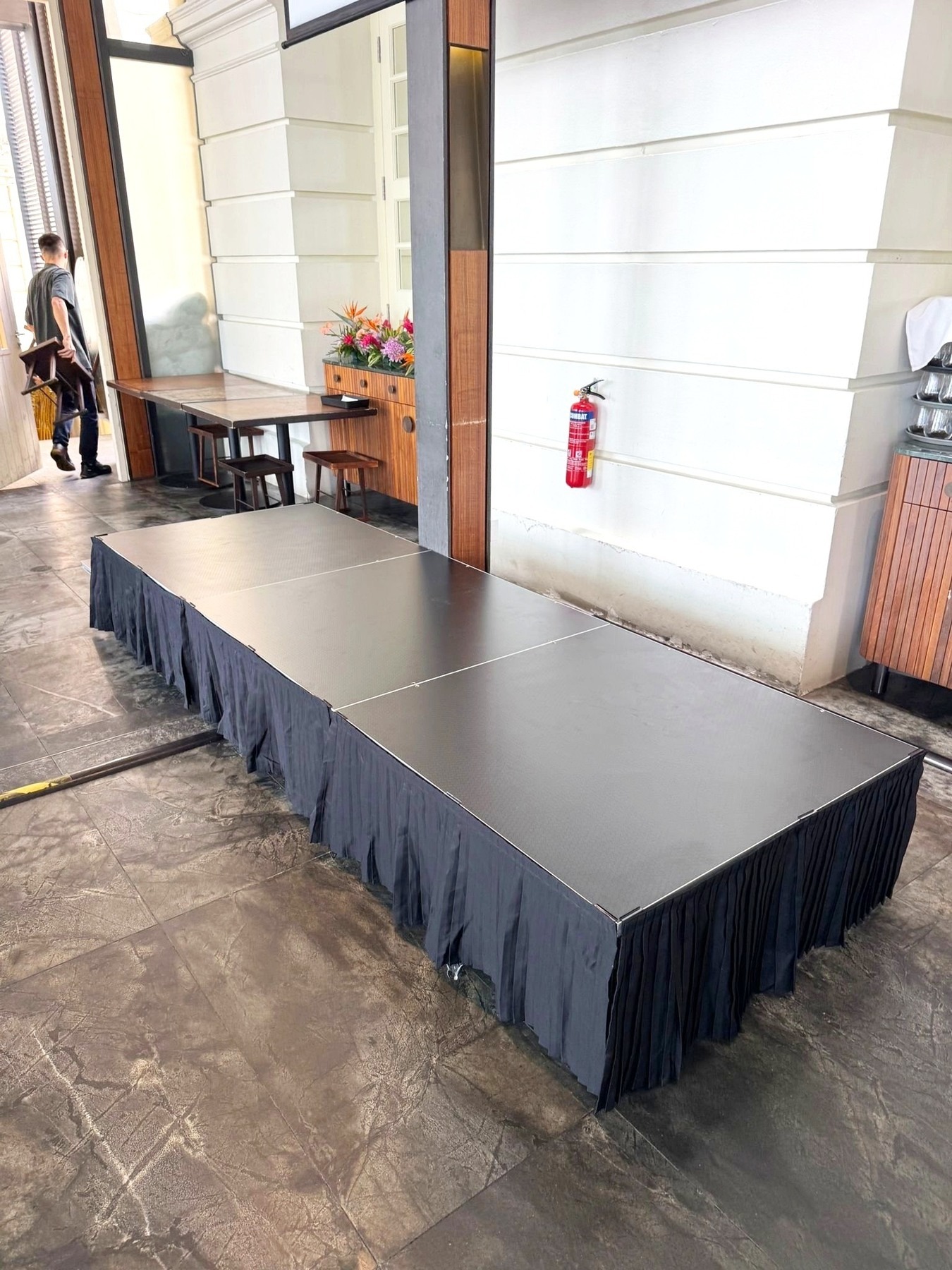
Should you start with a platform or the audience view?
Start with what the audience needs to see, then develop the platform arrangement with the supplier. A front-facing speech has one main point of attention. A discussion has several faces to keep visible, while a performance may use the centre and both sides of the stage.
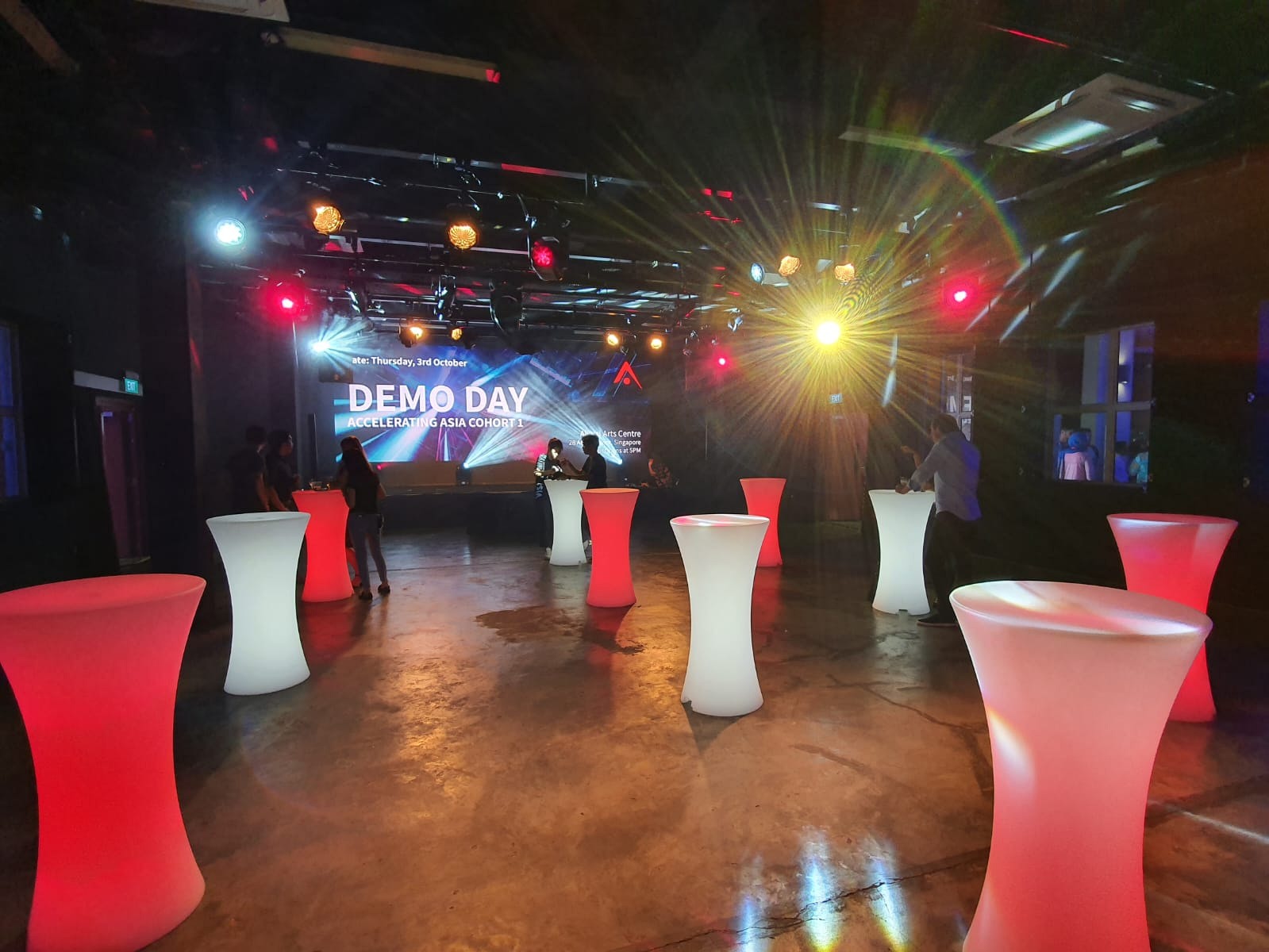
Sketch the audience position and the main action on the same page. Mark whether guests will be seated at dining tables, facing forward in rows or watching from a standing reception area. These are different viewing arrangements; the same stage photograph may not be a useful reference for all three.
Keep dimensions separate from visual inspiration. A photograph cannot establish a platform’s height, load capacity or usable floor area. Share venue measurements and the planned stage activity, then ask Big Top Events to confirm the proposed equipment and arrangement rather than estimating technical specifications from an image.
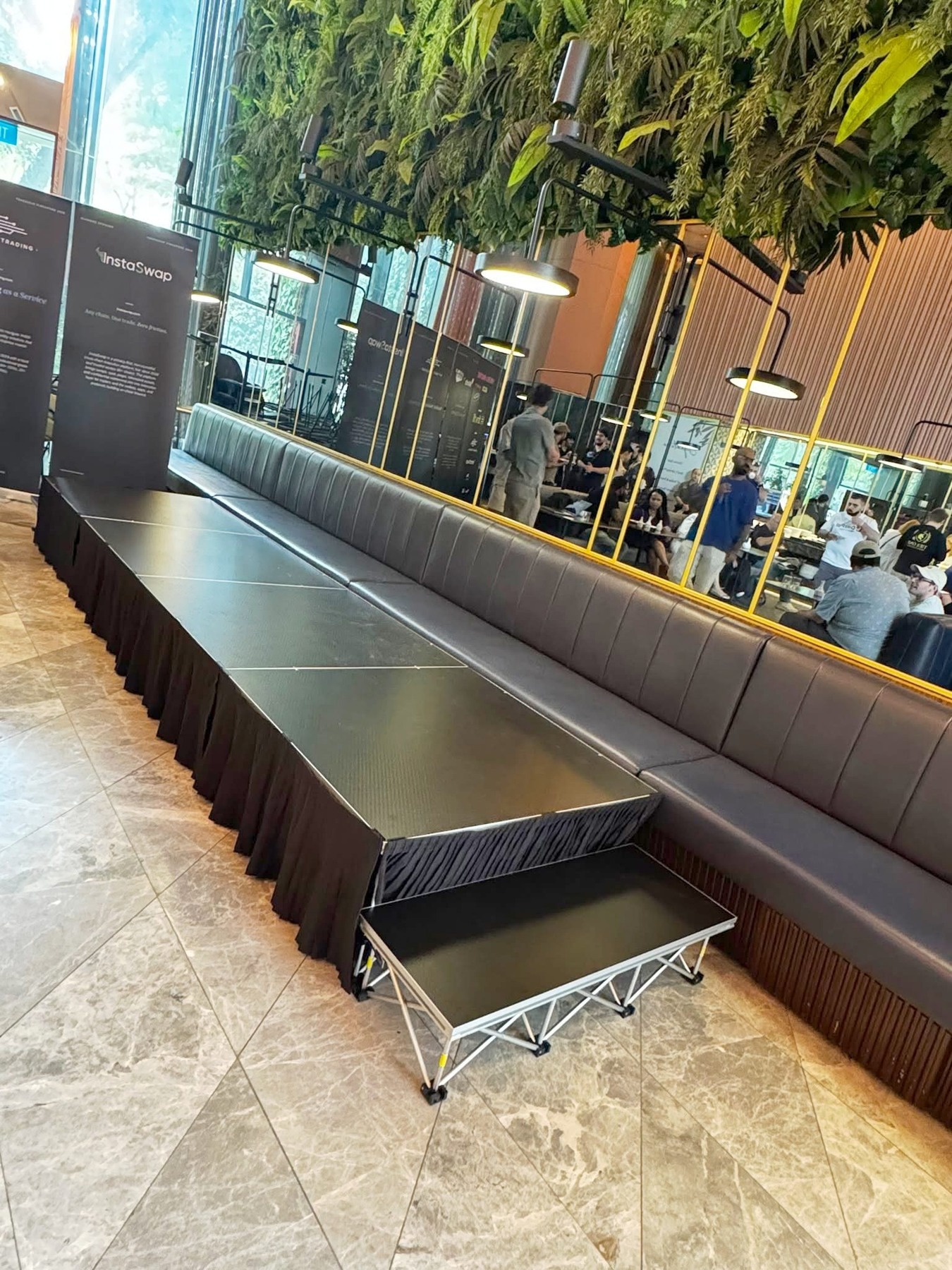
What needs to fit on the stage at the same time?
List people, furniture and presentation objects for each programme segment. The important question is what remains on stage together, not simply how many items appear during the entire event. A chair used for a discussion may need to leave before a group photograph or performance begins.
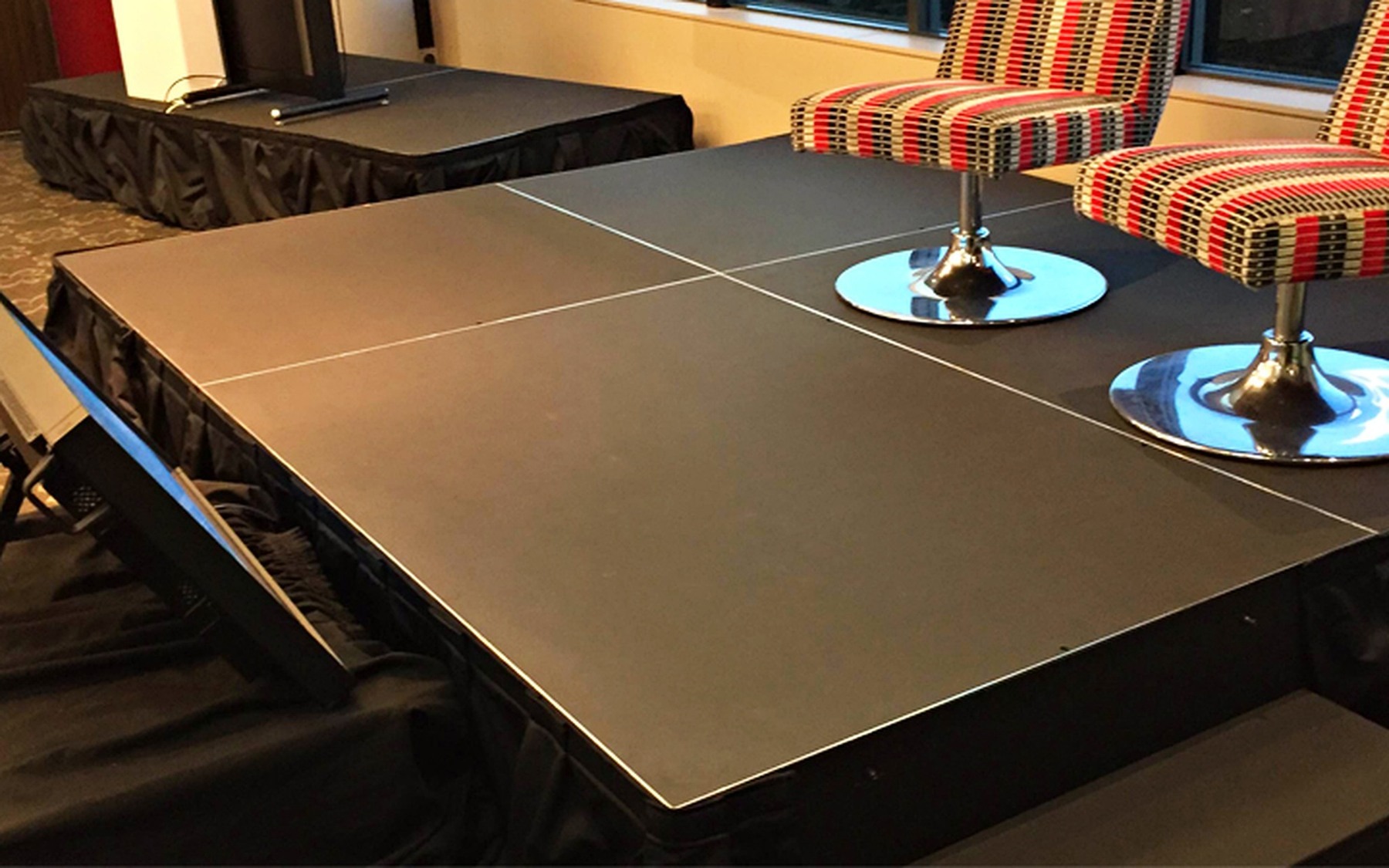
A useful first comparison is between a largely open platform and a furnished presentation area. An open centre can make the main action visually clear. Chairs, a lectern or a display pedestal give that action a specific setting, but each should have an identified role in the programme.
| Programme moment | Main visual priority | Details to include in the brief |
|---|---|---|
| Individual presentation | Presenter and supporting message | Standing position, screen or backdrop, microphone needs |
| Seated conversation | All speakers visible together | Chair arrangement, host position and any table |
| Group performance | Performers across the stage | Group arrangement, instruments and movement |
| Launch reveal | People and focal object | Object position, reveal sequence and photograph moment |
The table is a planning aid, not an equipment specification. Use it to explain the intended experience, then confirm the practical arrangement with the event team. If the programme changes, revisit the layout rather than assuming the original plan still fits.
How should seating relate to a covered stage?
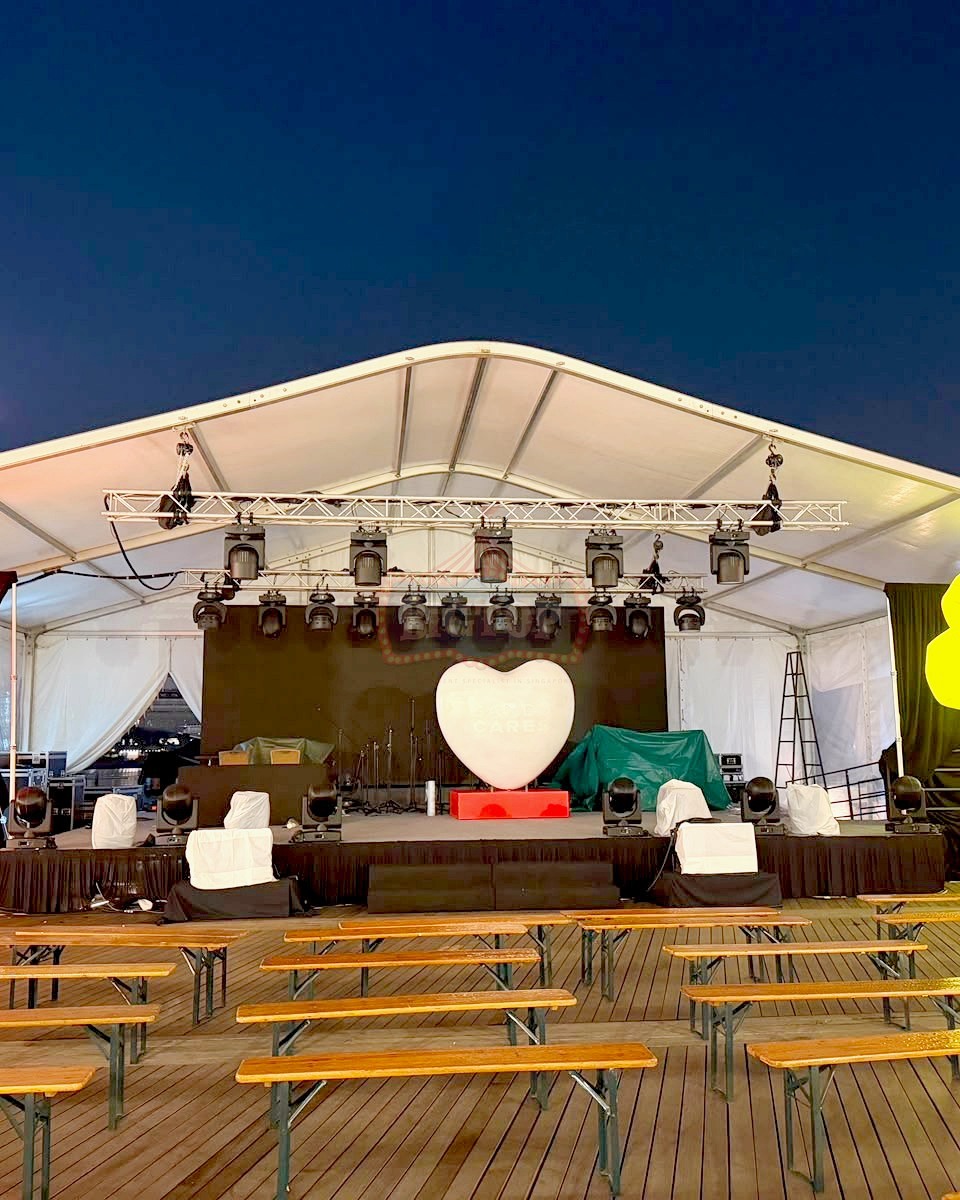
Audience seating and the stage should be discussed together. In a covered event area, a reference showing benches or chairs facing the platform can communicate the intended relationship more clearly than a close-up of the stage alone. Include a wider venue photograph so the surrounding space is visible too.
Distinguish the stage cover from the audience area in your brief. Ask which areas are included in the proposed tentage arrangement and what the venue permits. Do not infer weather protection, structural suitability or a complete outdoor setup from the presence of a canopy in a reference photograph.
For an event with several programme segments, Big Top Events’ event planning service provides a relevant starting point for discussing the overall sequence. Explain when guests will watch the stage and when they will be elsewhere, so the stage is considered within the event rather than as an isolated rental item.
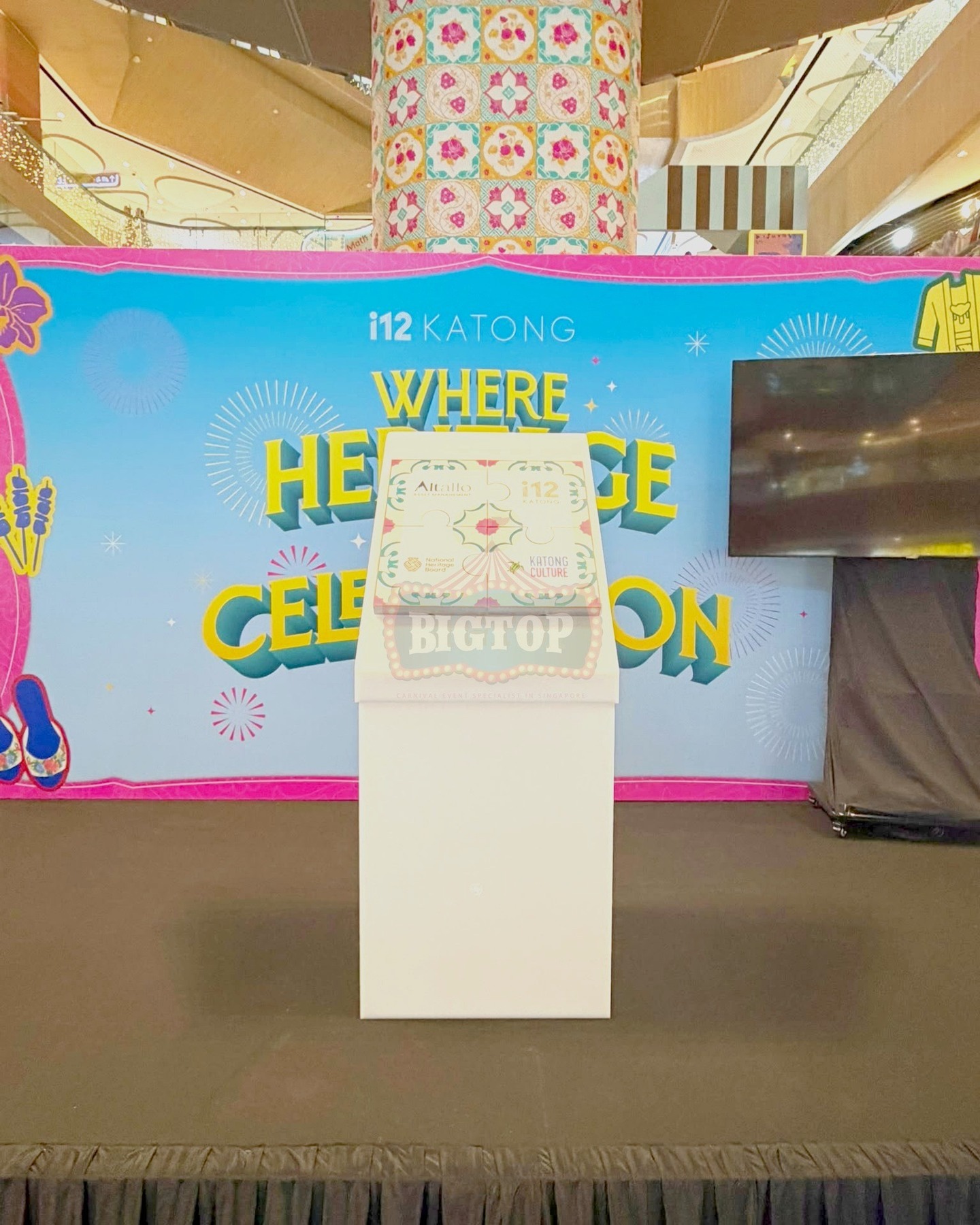
Where should a launch object or display pedestal go?
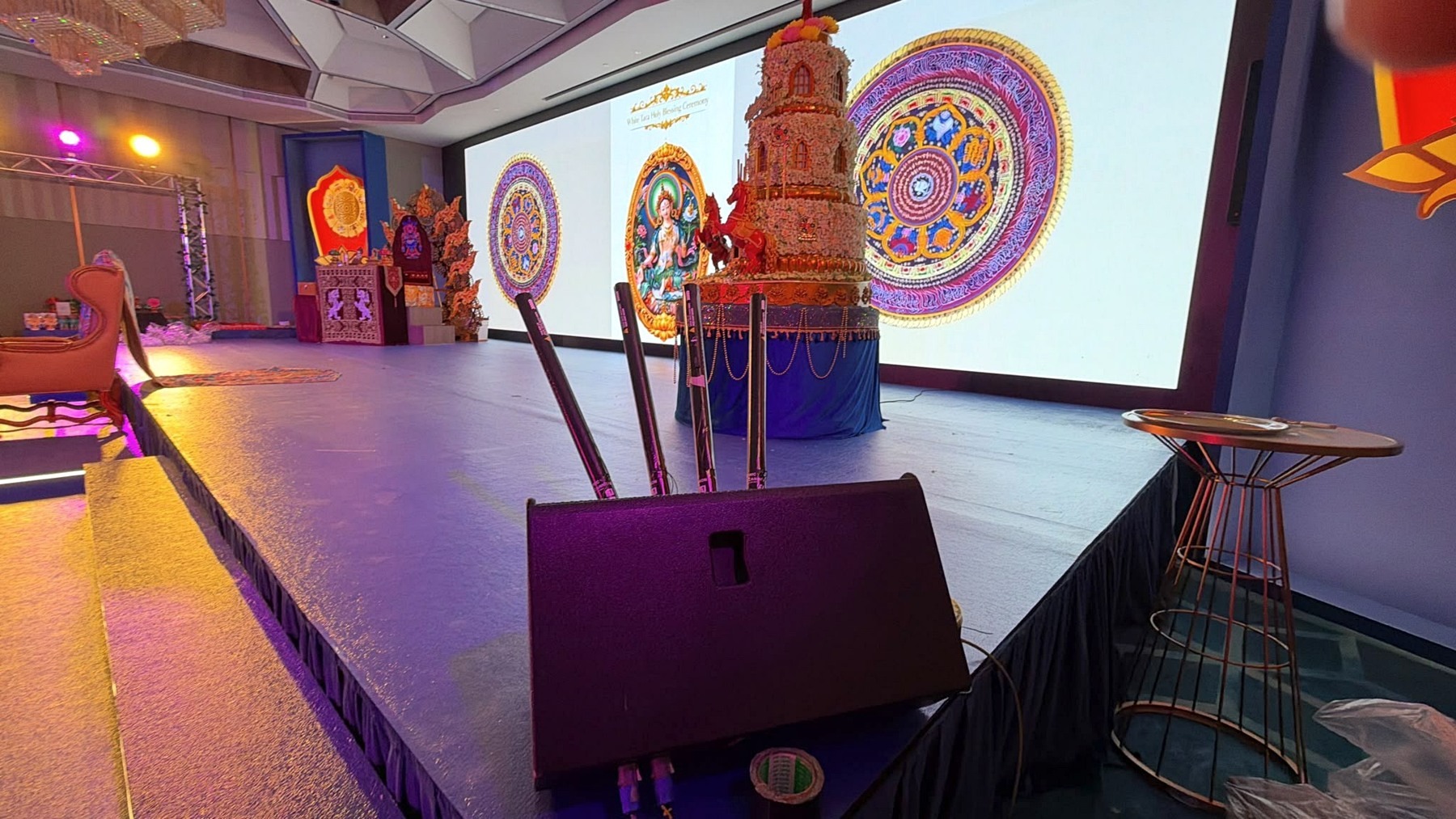
Place the main object in relation to the people who will use or present it. A central pedestal creates a different visual arrangement from an object at one side of the stage. Consider the planned photograph as well as the live moment: the object, participants and event message should make sense together.
Describe the action without inventing technical requirements. For example, tell the team whether participants will stand beside the display, gather behind it or move away after a reveal. Ask for confirmation of the relevant equipment and positioning before treating a reference image as an approved plan.
Keep decorative objects distinct from working presentation equipment. A prop may establish a theme, while a microphone or monitor serves a different purpose. Record both in the brief so a visually appealing sketch does not omit something needed for the actual programme.
How do you balance the backdrop with people on stage?
The backdrop should support the people and activity in front of it. A busy background, large prop or low decorative feature changes the visual balance even when the platform itself stays the same. Review the full composition rather than choosing each element from a separate reference photograph.
For a presentation, identify the message that should remain visible behind the speaker. For a performance, think about whether the background should be a strong focal point or a quieter setting. Describe this preference in ordinary language; you do not need to prescribe screen specifications or lighting settings to explain the intended result.
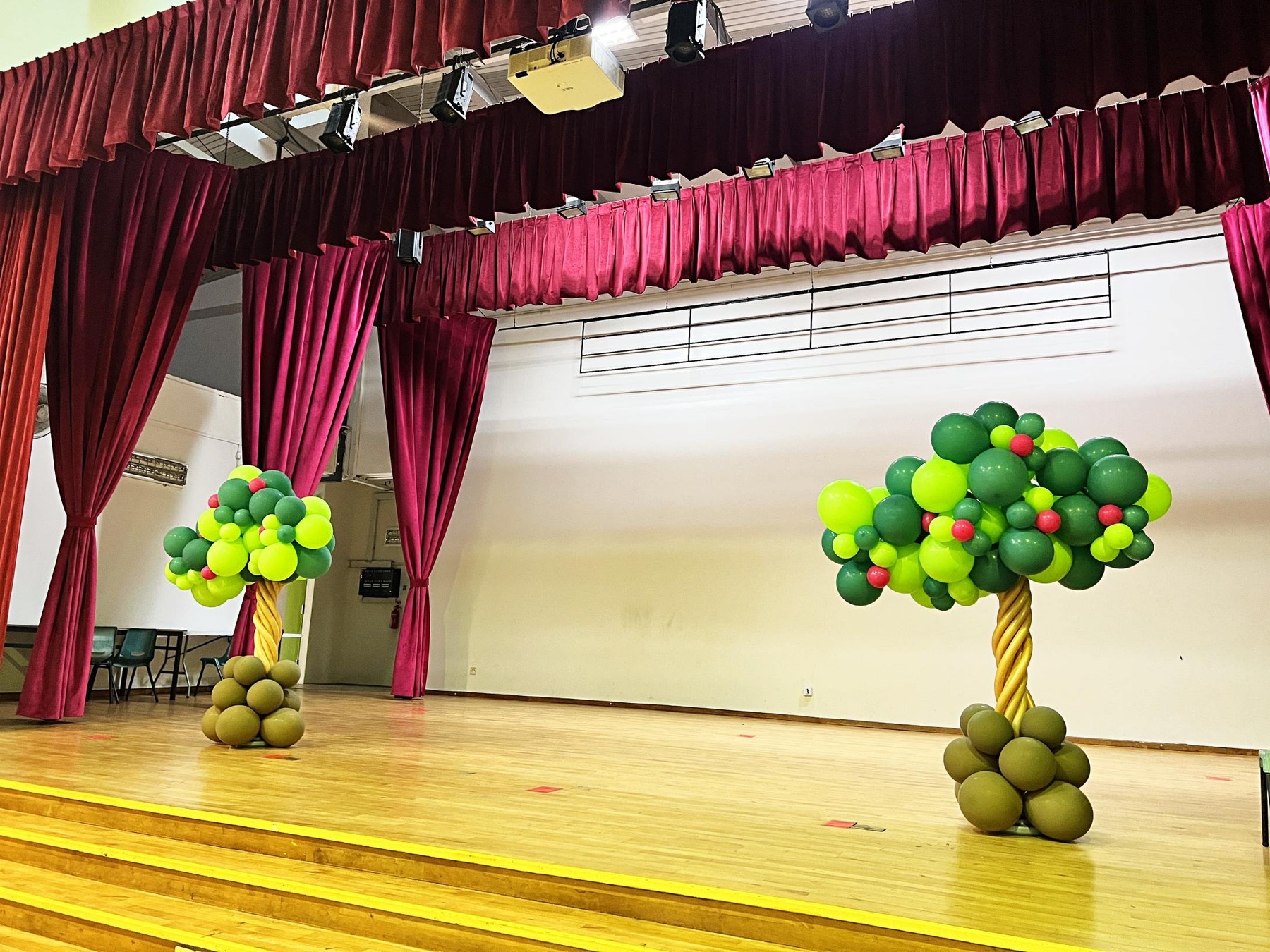
Low decoration at the front creates another layer in the picture. Ask the team to review its position alongside the platform, audience view and access arrangement. Big Top Events’ event decorations service is the relevant place to discuss how decorative elements relate to the stage presentation.
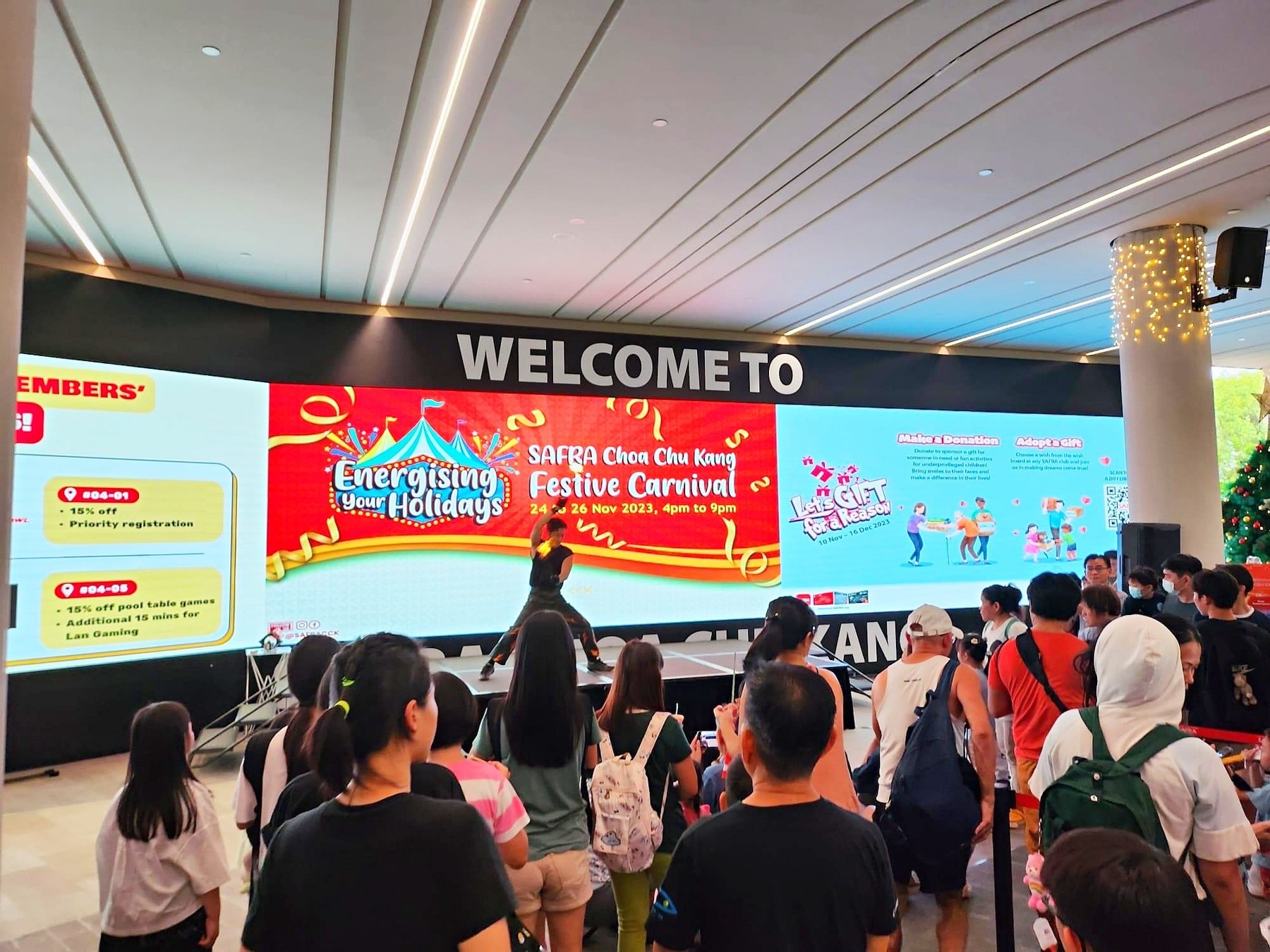
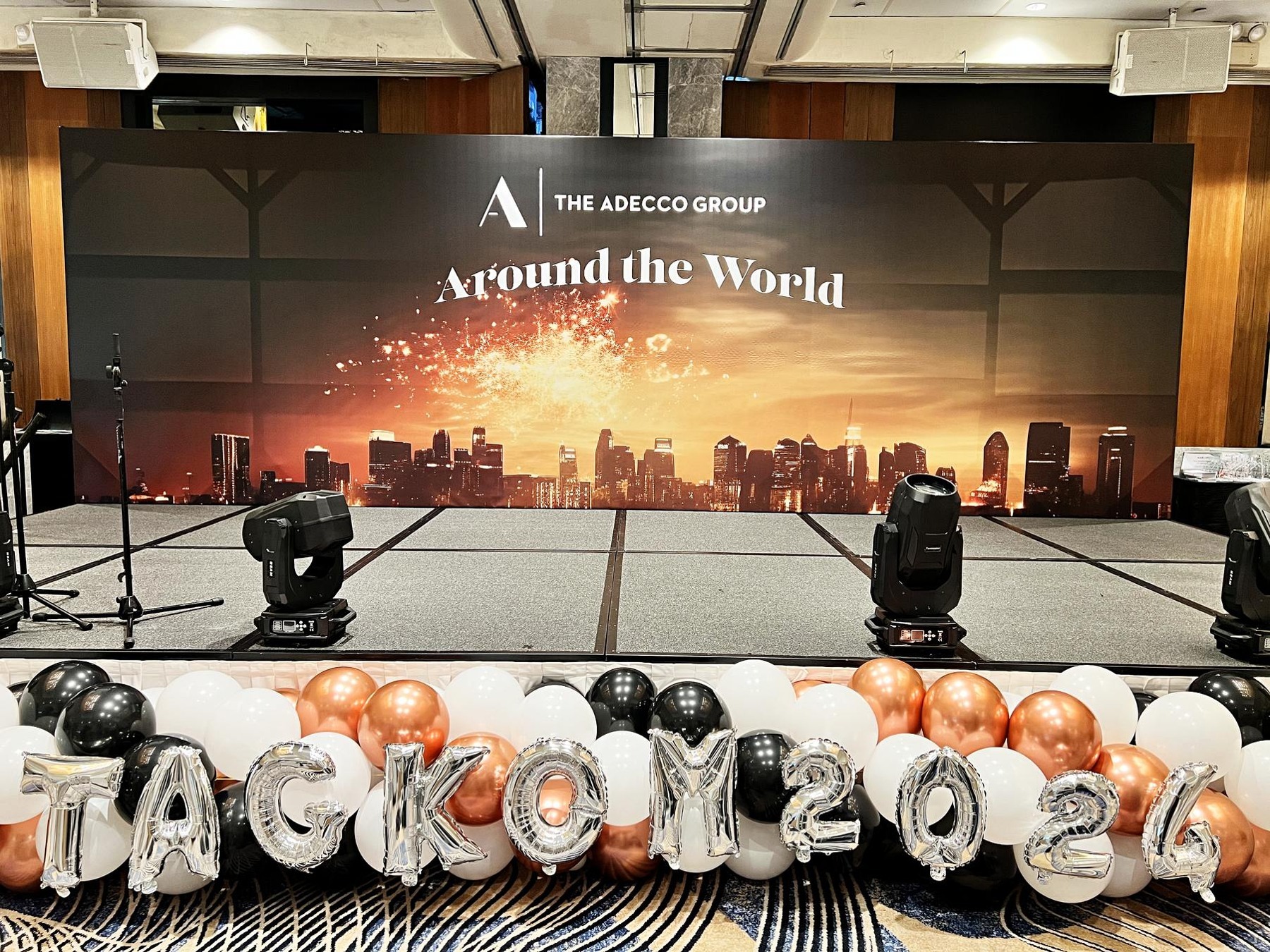
Compare the whole scene before choosing a reference
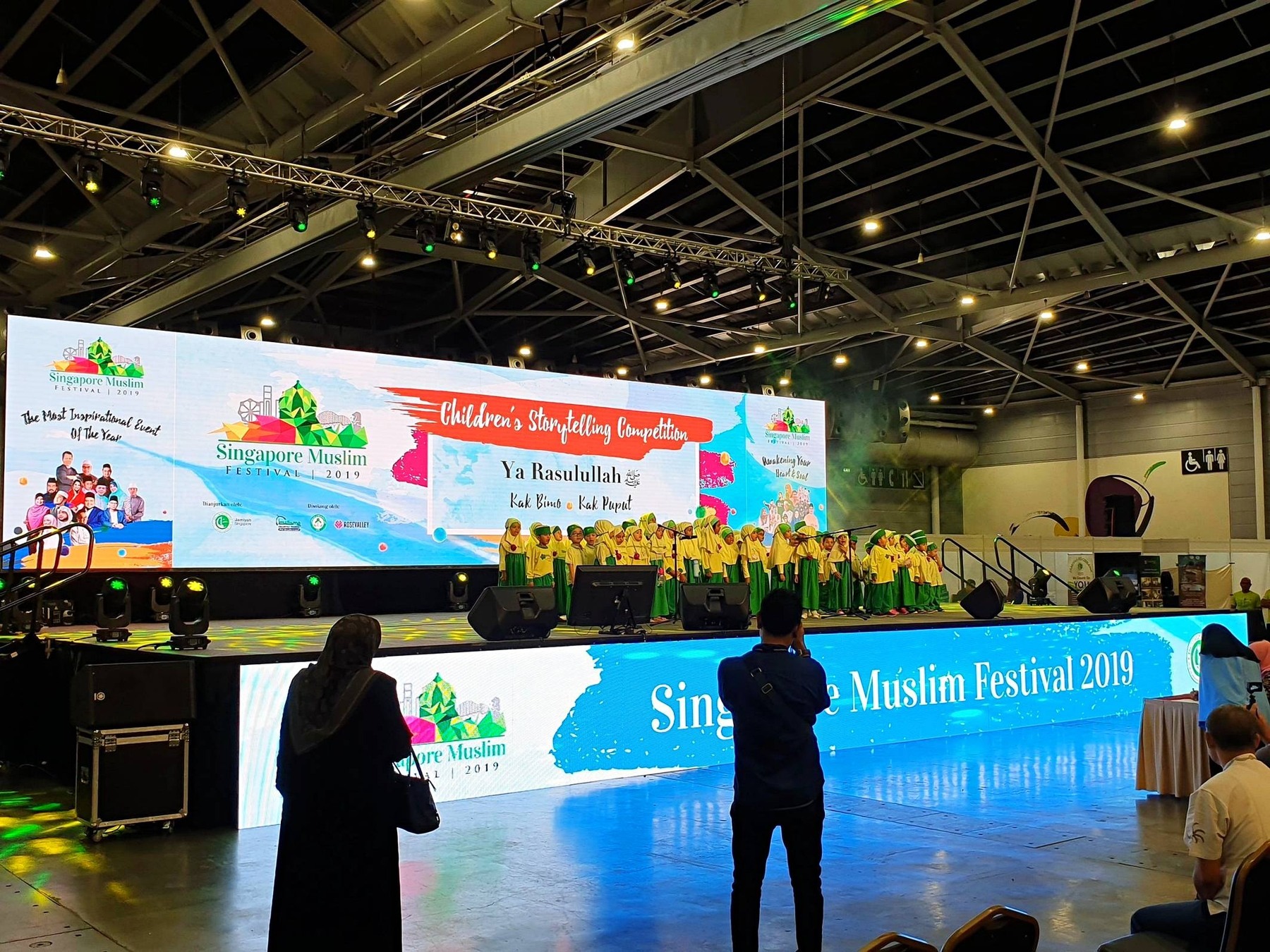
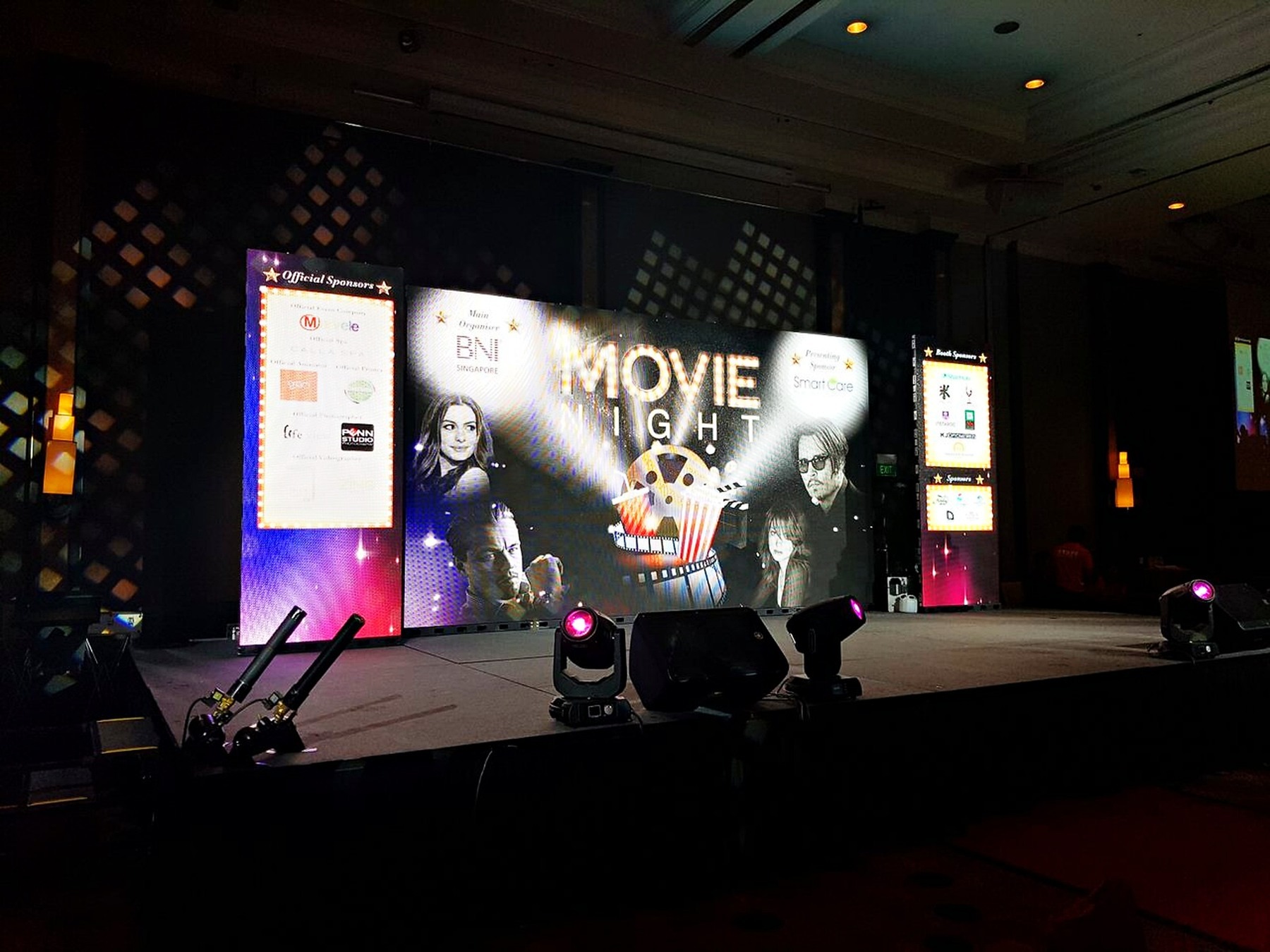
These examples show furnished platforms, standing reception areas, group performances and stages framed by screens or decorations. Notice the relationship between the centre of attention and its surroundings. A wide performance arrangement communicates a different intention from two chairs on a smaller presentation platform.
Choose references because they explain your programme, not because they contain the most equipment. Annotate what you like: an open centre, a restrained backdrop, a seated discussion or a particular relationship between stage and audience. Also identify anything you do not want included in the proposed arrangement.
Frequently asked questions
What stage size should I request for an event?
Begin with the activity, people and equipment that must fit together, then provide venue measurements for review. Ask Big Top Events to confirm an appropriate platform arrangement; audience numbers or a reference photograph alone do not establish the required size.
Can a stage be planned with a backdrop and sound?
Big Top Events offers stage and sound rental as well as event decorations and planning. Include these requirements in one enquiry and ask which items are included in the proposed scope, rather than assuming a platform quotation covers them all.
Can I use the same layout for a speech and a performance?
It may be possible, but the two segments should be considered separately before agreeing on one arrangement. Explain which chairs, display objects or equipment remain in place and what changes between the segments.
What should I send when enquiring about a stage?
Send the event date, venue, programme outline, available measurements and photographs of the proposed area. Add the people, furniture and display items expected on stage, together with references that explain the visual arrangement you prefer.
How should I choose a stage backdrop?
Start with what the audience should notice behind the presenter or performers. Discuss the message, visual style and relationship to the stage with the event team, then confirm the proposed backdrop rather than copying the dimensions or equipment shown in a photograph.
Discuss your stage arrangement with Big Top Events
For event stage layouts that support your actual programme, contact Big Top Events with your venue information and preferred references. You can also WhatsApp Lynn Kwah at 8780 4685 to discuss the stage, rental and planning requirements for your event.


